
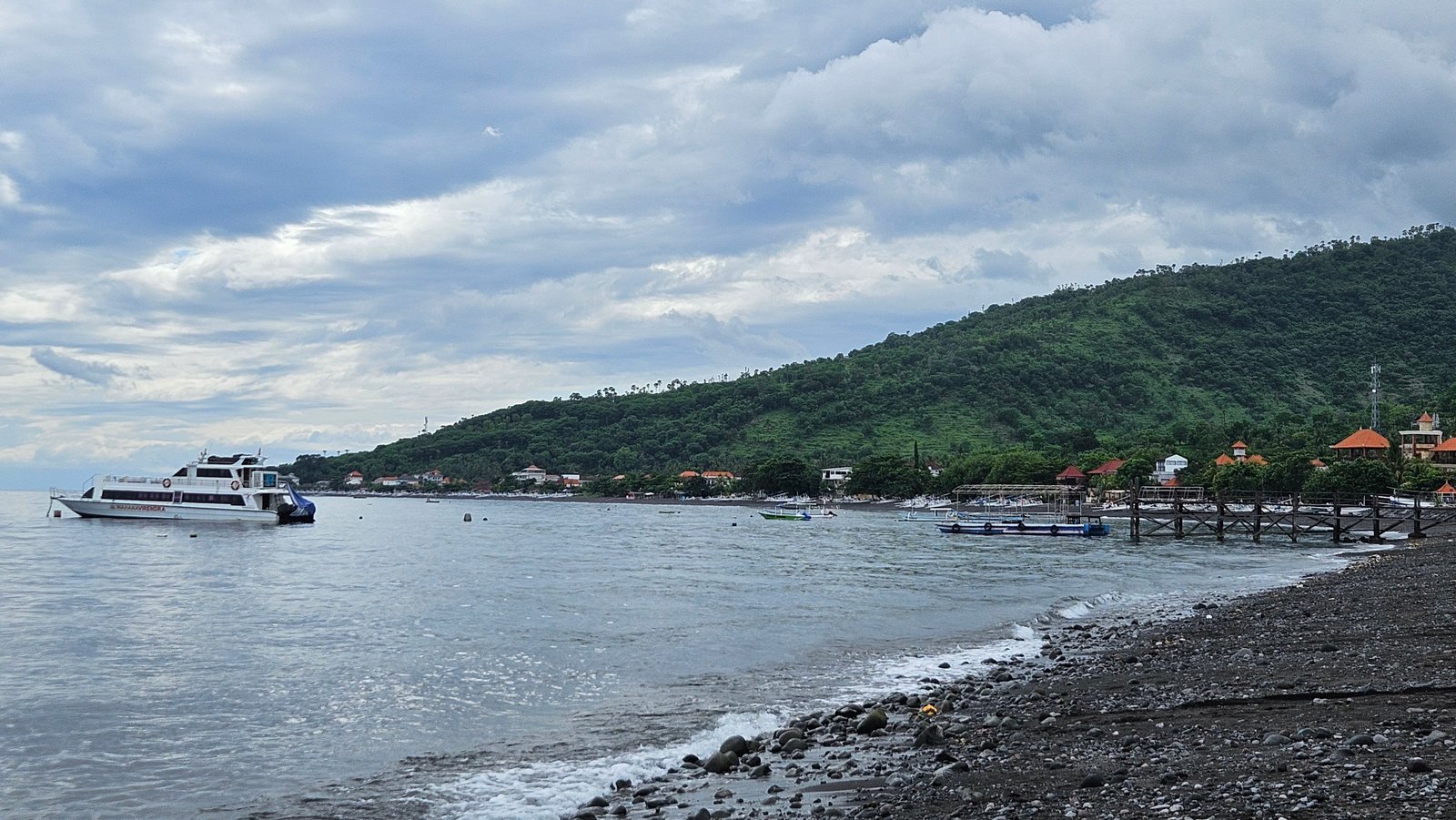
Amed, located on the northeast coast of Bali in Karangasem Regency, has a very different history from Bali’s larger harbour towns. Unlike commercial ports such as Padang Bai or Benoa, Amed developed from a collection of traditional fishing villages along the coastline rather than from a major trading harbour.
Traditional Fishing Villages of East Bali
For generations, the coastal communities around Amed depended mainly on fishing, salt production and small-scale agriculture. Local fishermen used traditional Balinese boats called jukung, which became one of the most recognizable symbols of Amed’s coastline.
The calm waters of the Lombok Strait and the location between Bali and Lombok made the area naturally connected with the sea. Boats were an important part of everyday life, long before tourism arrived.
Salt Production in Amed
Amed is also known for its traditional sea salt production, a practice that has been passed down through local families for many generations.
Using traditional methods, seawater is collected, filtered through volcanic sand and dried under the sun to produce natural sea salt. Although fewer families continue this work today, salt farming remains an important part of Amed’s cultural identity.
Development of Tourism in Amed
Compared with South Bali, tourism arrived much later in Amed. The area became popular mainly among travellers looking for a quieter and more traditional side of Bali.
Amed’s clear waters, coral reefs and marine life helped transform the region into one of Bali’s best-known destinations for snorkeling and diving. Nearby dive sites, including reefs around Jemeluk Bay and the famous USAT Liberty Shipwreck in Tulamben, attracted visitors from around the world.
Amed as a Gateway to the Gili Islands and Lombok
As tourism increased, Amed’s location close to Lombok created demand for faster sea connections. Small fast boat services started operating from the Amed coastline, giving travellers a shorter alternative route between East Bali, the Gili Islands and Lombok.
The route became especially popular because visitors could combine diving in Amed with island trips to Gili Trawangan, Gili Air, Gili Meno and Lombok without travelling across Bali to larger ports.
Amed Harbour Today
Amed Harbour was never developed into a large commercial passenger harbour. It remained a small coastal departure area connected mainly with tourism and fast boat transfers.
Today, regular fast boat departures from Amed are unavailable, and most travellers use nearby Padang Bai Harbour for island connections.
However, Amed continues to be one of East Bali’s most unique coastal destinations, preserving its fishing traditions, salt-making heritage and strong connection with the ocean.